Facilities of
TVP's C.H.E.F. Institute

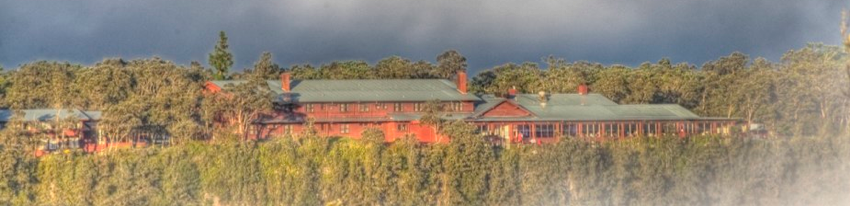
Facilities of
TVP's C.H.E.F. Institute
E Komo Mai - "Welcome"
Home | About | Contact | Media Gallery | Support
Apply | Benefits | Blog | Events | Facilities | Going Green | People | Petition | Print | Supporters | Webcam
Photo courtesy
Best Viewed In:



Early Tourist at Volcano
By David Miranda © 2009
For all the anticipation and excitement that a trip to the Hawaiian Islands presents to the modern traveler; with mental images of Waikiki and Diamond Head, it is astounding that the first commercial accommodation for the visiting tourist was in fact the Volcano House. The ancients, of course, did journey through the forests and uplands to honor the deity Pele at her home in Kīlauea’s Halemaʻumaʻu Crater. And they traveled to the summit of Mauna Loa as well; the remains of their ancient trails still present on the mountain today. But this was home and Pele was very real and present to them. They were not tourist in the true sense of the word.
In the early 1800’s, the splendor of Kīlauea began attracting many notable personages. Around 1824, the High Chiefess Kapiolani with an entourage visited Kīlauea. They stayed in a small thatched house near the rim of the caldera. A second grass house replaced this and in 1861 a third grass house was erected. A few years later; in 1866, American author Mark Twain visited Kīlauea, traveling on horseback from the Kau district of Hawaiʻi Island. He stayed at this grass thatched Volcano House, taking in the view of Kīlauea from its porch with his companions. He found it to be “a neat little cottage with four bedrooms, a large parlor and dining room…”. In his journal he comments on the red glow of the molten lava reflected on the faces of his companions and wall of the porch, as they sat contemplating the scene before them.
The Kingdom of Hawaiʻi was thriving in the later 1800’s. King Kalaukaua was a traveling emissary; seeking new ways to increase Hawaiʻi’s economy. His efforts were many. In 1875, a Treaty of
cont'd on "People"
Coming Soon!


Want a career?
Apply to The Volcano Project's
Hospitality & Culinary Institute